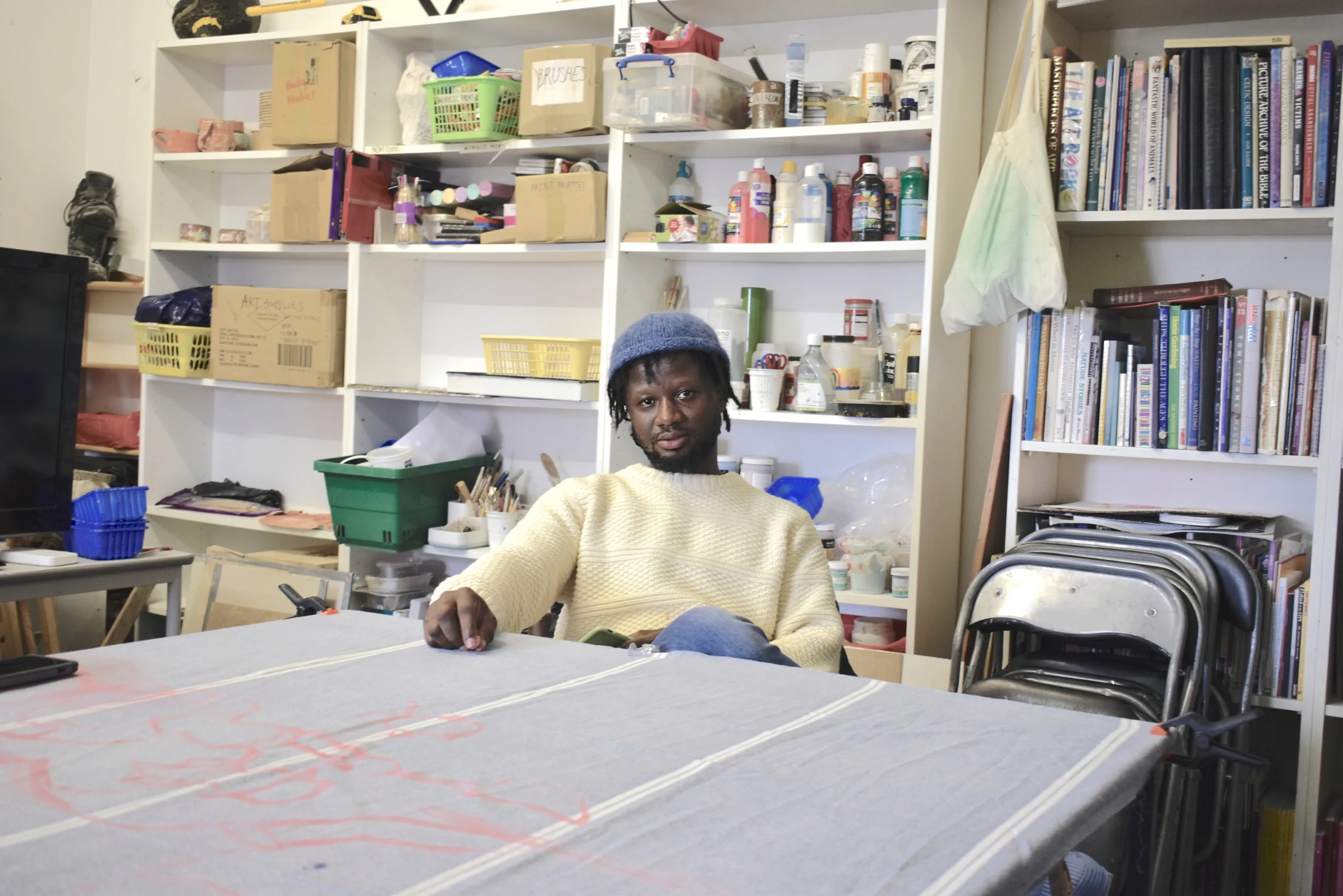
Percy Nii Nortey is a multidisciplinary artist born and based in Kumasi, Ghana. His practice explores themes of identity, materiality, decolonization, memory, and labor, blurring the boundaries between installation, performative objects, and moving sculptures. Deeply rooted in his personal history and the socio-economic conditions of Ghana, Nortey’s work aims to decolonize minds, empower Black communities, and reclaim agency over their narratives. Community engagement is central to his artistic approach. He actively collaborates with local working- class communities in his creative process by distributing second-hand fabrics, retrieving them after use, and transforming them into large scale artworks. These worn fabrics—stained with residue of dirt, charcoal, grease, and oil from daily labor—become archives of resilience, highlighting the significance of labor and its role in society. Nortey’s work has been exhibited in cultural institutions and festivals locally and internationally, including the Dekoloniale Festival (Berlin), Kunstenfestivaldesarts (Brussels), Orderly Disorderly (Museum of Science and Technology, Accra), and Chale Wote Street Art Festival (Accra). His ongoing practice continues to investigate how everyday materials and collective memory can serve as radical tools for resistance, storytelling, and transformative healing.
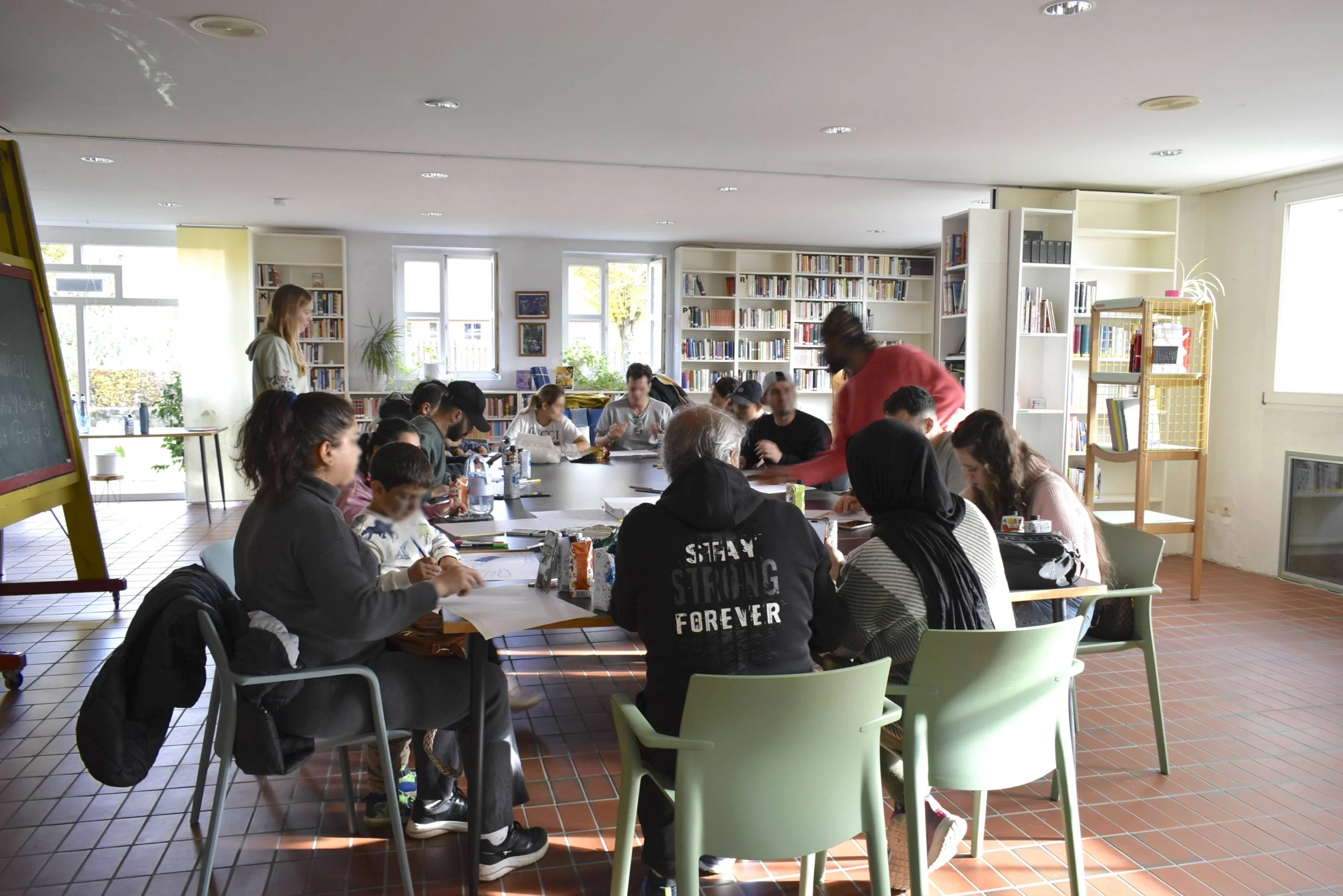
“During my stay at Künstler*dorf Schöppingen, I organized a two-day workshop with residents of European Homecare, bringing together children and adults to explore drawing as a tool for healing, self- expression, and reflection. The sessions provided a safe and supportive environment where participants could reconnect with their inner worlds and communicate personal experiences through visual language. For the children, the workshop offered space to express emotions that are often difficult to articulate verbally. For the adults, it encouraged reflection on personal and collective experiences, memory, identity, and belonging. The workshop was deeply rewarding for me and inspiring for the participants and staff, highlighting the transformative power of art in fostering connection, self-discovery, and community.“