Jury
Literature
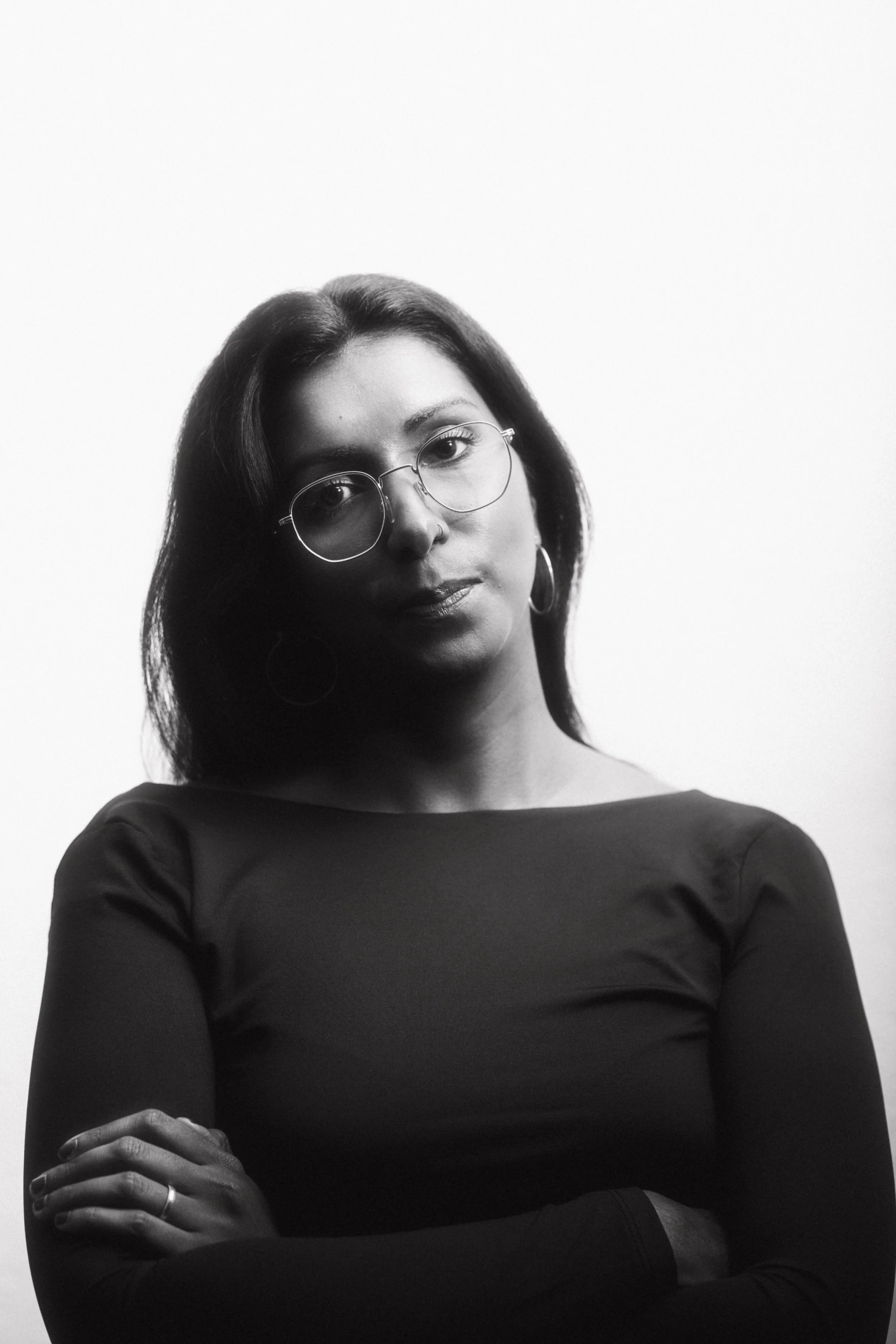
Rubiga Murugesapillai (2026-2029)
Rubiga Murugesapillai, born in 1994, studied English, psychology, and transcultural studies in Bonn, Singapore, and Heidelberg. After completing internships at ROOF Music and Kiepenheuer & Witsch, she now works as an editor for the Lübbe and Pola imprints of Bastei Lübbe AG. Murugesapillai is also a DJ and curator of various events, and views her sets as an expression of empowerment and community.

Michaela Predeick (2024, 2026-2027)
Michaela Predeick is the dramaturge of the international literature festival “poetica” at the University of Cologne and is doing her doctorate as a literary scholar on figurations of depression in contemporary literature and theater. She studied art history, German language and literature as well as theater, film and television studies in Cologne and worked in dramaturgy at Schauspiel Köln and Deutsches Schauspielhaus in Hamburg – both under the directorship of Karin Beier. She has been a research assistant at the University of Cologne since 2019, where she teaches on the Theories and Practices of Professional Writing course. In addition, Michaela Predeick regularly moderates and organizes readings; in August 2024, she will launch “Unruly Readings”, a series for literature and performance in Cologne that she co-curated.

Deniz Utlu (2024-2026)
Deniz Utlu, born in Hanover in 1983, is a writer and essayist. For his novel „Vaters Meer“ (2023), he received the Bavarian Book Prize as well as the LiteraTour Nord Literature Prize and the Special Prize of the European Union Prize for Literature, an excerpt of which was awarded the Alfred Döblin Prize before publication. The novel „Gegen Morgen“ was published in 2019. His novel „Die Ungehaltenen“ (2014) was adapted for the stage at the Maxim Gorki Theater. Utlu researches international human rights policy at the German Institute for Human Rights in Berlin. He teaches literary writing at the German Literature Institute in Leipzig and at the Institute for Language Arts in Vienna. Utlu lives and works in Berlin.

Shane Anderson (2025-2027)
Shane Anderson is the author of After the Oracle, Or: How The Golden State Warriors’ Four Core Values Can Change Your Life Like They Changed Mine (Deep Vellum). Published work in various forms can be found in various places. A translator of a number of contemporary German poets, he is also the translator of The Great Nowitzki (Norton). He is represented by Priscilla Posada at Regal | Hoffmann & Associates and lives in Wuppertal with his family.
Visual Arts

Prof. Dr. Georg Imdahl (2024-2026)
Prof. Dr. Georg Imdahl, born in Münster in 1961, lives as an art critic in Düsseldorf. Since 2011, he has held the professorship for Art and the Public at the Kunstakademie Münster. He completed his doctorate in 1995 at the Private University of Witten/Herdecke on the early work of Martin Heidegger („Das
Understanding Life“, Würzburg 1997). Most recent book publication: „Ausbeute. Santiago Sierra und die Historizität der zeitgenössischen Kunst“, Fundus series with Philo Fine Arts publishers, 2nd ed. Hamburg 2023.
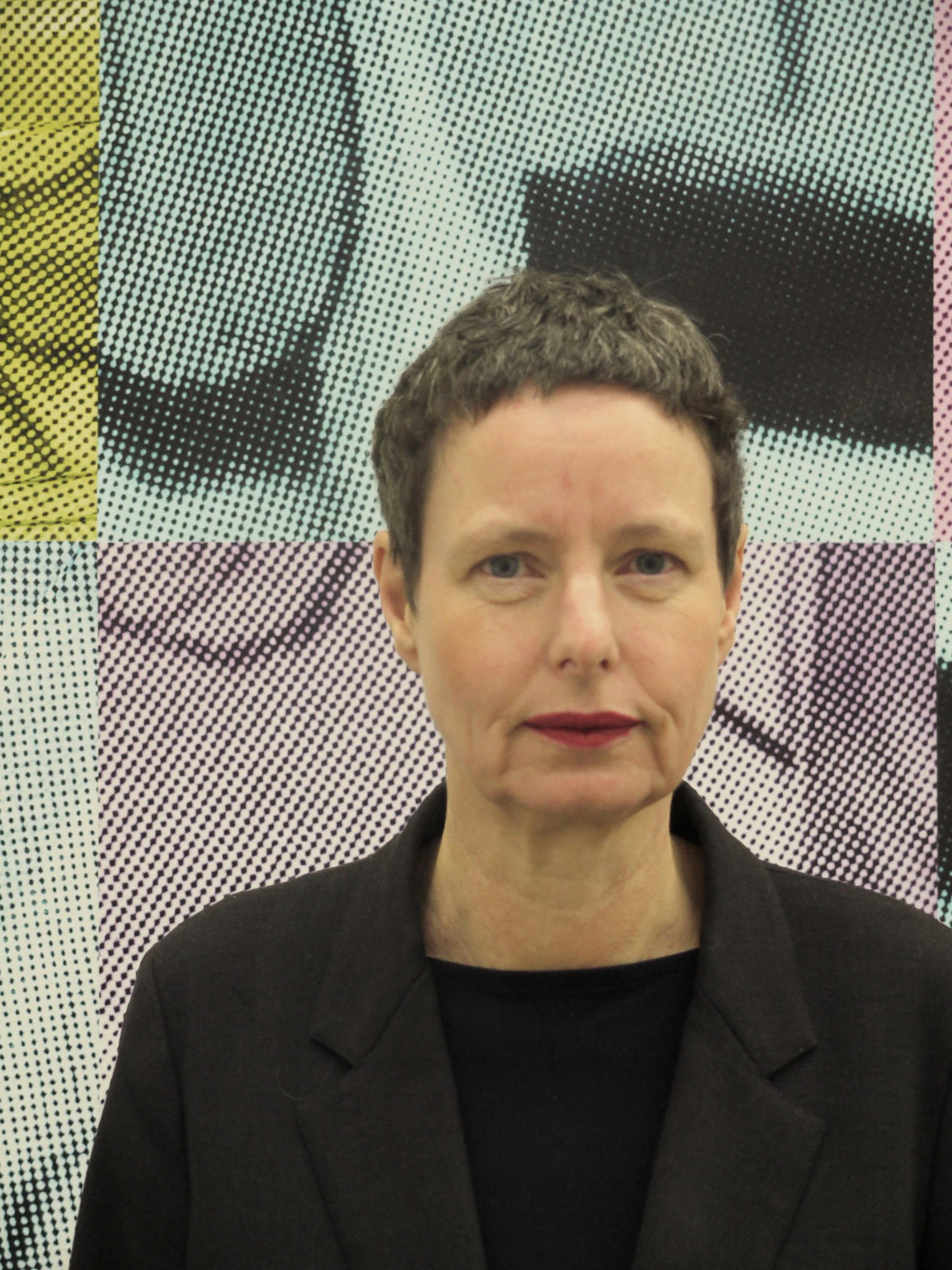
Meike Behm (2024-2026)
Meike Behm is an art historian, director of the Kunsthalle Lingen and managing director of the Kunstverein Lingen.
In 1995, Meike Behm founded the independent exhibition space “rraum” in Frankfurt am Main, where she realized numerous solo exhibitions together with her husband, the artist Peter Lütje, first in Frankfurt am Main and then in Hamburg until 2006.
At Kunsthalle Lingen, Meike Behm is responsible for solo exhibitions with nationally and internationally renowned artists as well as group exhibitions on currently relevant topics such as identity and role play, role models and homage or feminism. Meike Behm is the editor of numerous catalogs on contemporary artists and the author of art history texts, including on the history of art associations in Germany. From 2014 to 2024, she was chairwoman of the Arbeitsgemeinschaft Deutscher Kunstvereine e.V. (ADKV).
Paloma Nana (2025-2027)
Paloma Nana is a freelance cultural worker, musician and curator. Her practice centers on collaborative and interdisciplinary projects grounded in intersectional and decolonial perspectives, working across the intersections of art, popular and subcultures, education and art mediation, independent research, and community-based practice.
She worked as Co-Coordinator for Institutional Accessibility and Collaborative Practice at Temporary Gallery – Centre for Contemporary Art as part of the EU-network project Islands of Kinships (2022-2024). In conjunction with the exhibition Unruly Kinships (2023), she also curated and moderated the experimental event series It’s Fiction Like a Sitcom, whose title references Mykki Blanco’s song Family Ties (2022).
Together with artist and professor of art Havîn Al-Sîndy, she initiated and developed the project Collaborative (Un-)Learning, which brings together young people and practitioners from the arts in collaborative artistic and curatorial processes. The project culminated in the 2025 exhibition Visible, Invisible, Irrelevant?, developed by students of Katharina-Henoth Comprehensive School (Cologne) in close collaboration with Havîn Al-Sîndy.
Among her current engagements is her role as Assistant Curator at Mental Health Arts Space (MHAS), a project space founded by independent curator and writer Kathy-Ann Tan in Berlin.

Sam Hopkins (2024-2026)
Sam Hopkins is an artist and scholar who is attentive to the ways in which narratives and truths are encoded and produced by different media. His work is rooted in Kenya and engages with specific networks to collectively interrupt authoritative narratives of power. He explores various ways of ‚co-producing‘ artworks as counter narratives that can be read both within and beyond the gallery/museum. Hopkins has participated in various international exhibitions, including biennales in Lagos, Dakar, Poznan, and Moscow, and has exhibited at a wide range of museums and galleries, including the Dortmunder U, Kunstmuseum Bonn, Kunsthaus Bregenz, the Goodman Gallery, and Richard Taittinger Gallery. His work is held in the collections of the Smithsonian, Gendenkstätte Buchenwald, Abteiberg Museum, Rautenstrauch-Joest Museum and the Iwalewahaus. In 2014 he was named one of the 100 Leading Global Thinkers by Foreign Policy Magazine. He currently works as an Assistant Professor at the Academy of Media Arts in Cologne and continues to develop his research in Nairobi.
Composition

Stefan Beyer (2024-2026)
Stefan Beyer, born in Braunschweig, studied music and composition in Leipzig and Gothenburg. He is an alumnus of the Schöppingen artists‘ village as well as other residencies in Rolandswerth, Wiepersdorf, Schreyahn, Paris and Los Angeles. He was a fellow of the Else Heiliger Fund and is a winner of the Toru Takemitsu Award. He has collaborated with the Tokyo Philharmonic and Ensemble Modern, among others. Stefan Beyer is a founding member and chairman of the group forma Leipzig and is also active as a concert organizer (2023/24 Gewandhaus zu Leipzig and Elbphilharmonie). He lives and works in Berlin.
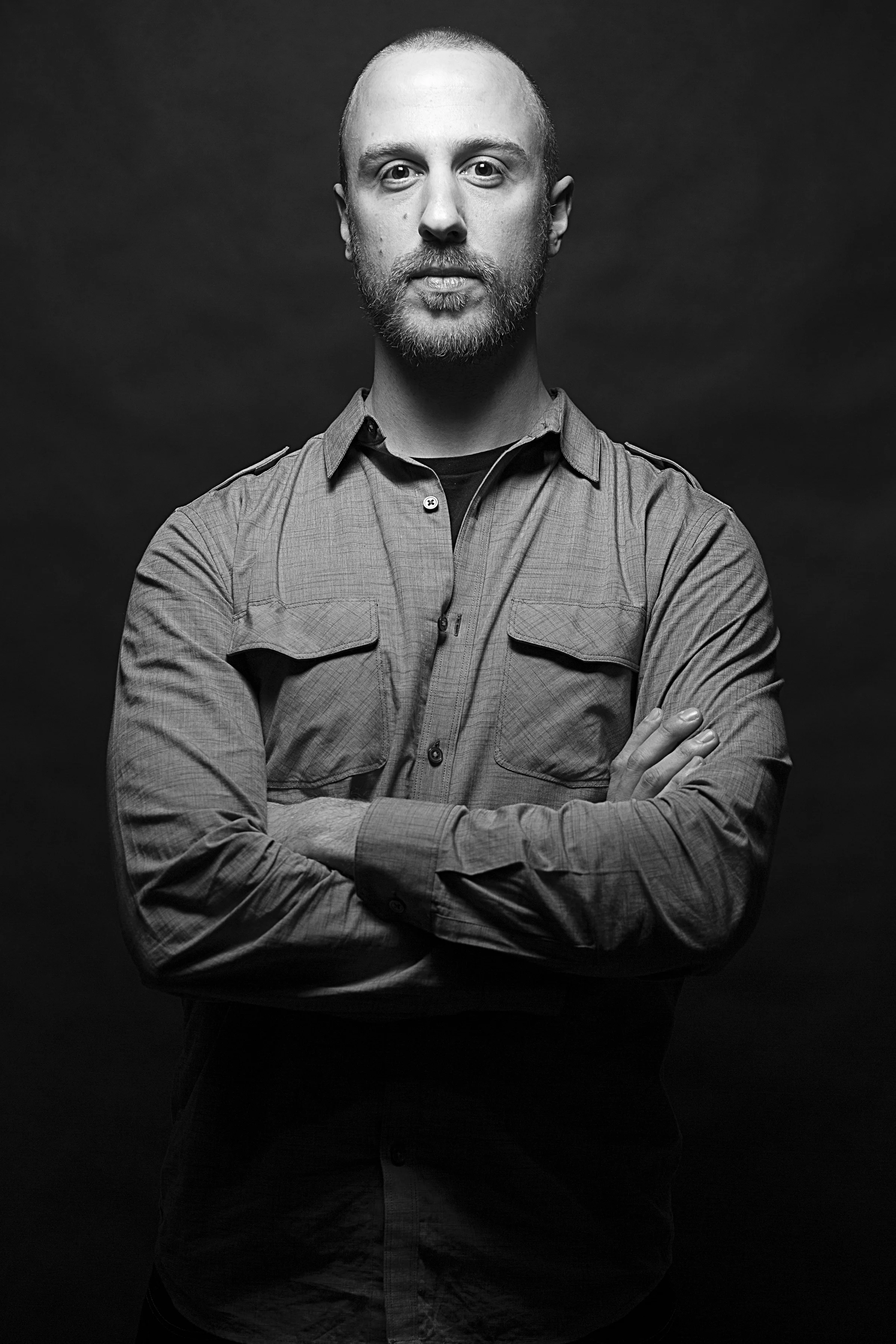
Prof. Dr. Mark Barden (2024-2026)
Mark Barden (born 1980 in Cleveland, Ohio, USA) composes concert music and sound installations with and without live musicians. Barden has been Professor of Composition at the Detmold University of Music since 2020.
Barden has received numerous international awards for his compositional work, including the Ernst von Siemens Music Foundation’s Composer Award, 1st prize in the Konzerthaus Berlin’s multimedia competition “Interactive Composition”, the GEMA German Music Authors‘ Award, a scholarship award from the Darmstadt International Summer Courses for New Music, the 2016 commission from the Bavarian Academy of Fine Arts, as well as residency scholarships from the Academy of Arts Berlin, the German Study Center in Venice and the Künstlerhof Schreyahn. His works are frequently performed at major festivals (Donaueschinger Musiktage, Wien Modern, Éclat, Acht Brücken, Ultraschall, Royaumont, Présences, Wittener Tage für neue Kammermusik, et al.) by musicians such as Klangforum Wien, ensemble intercontemporain, Nic Hodges, Ensemblekollektiv, ensemble recherche, the Mivos Quartet, KNM Berlin, ELISION, Ensemble Mosaik and others.