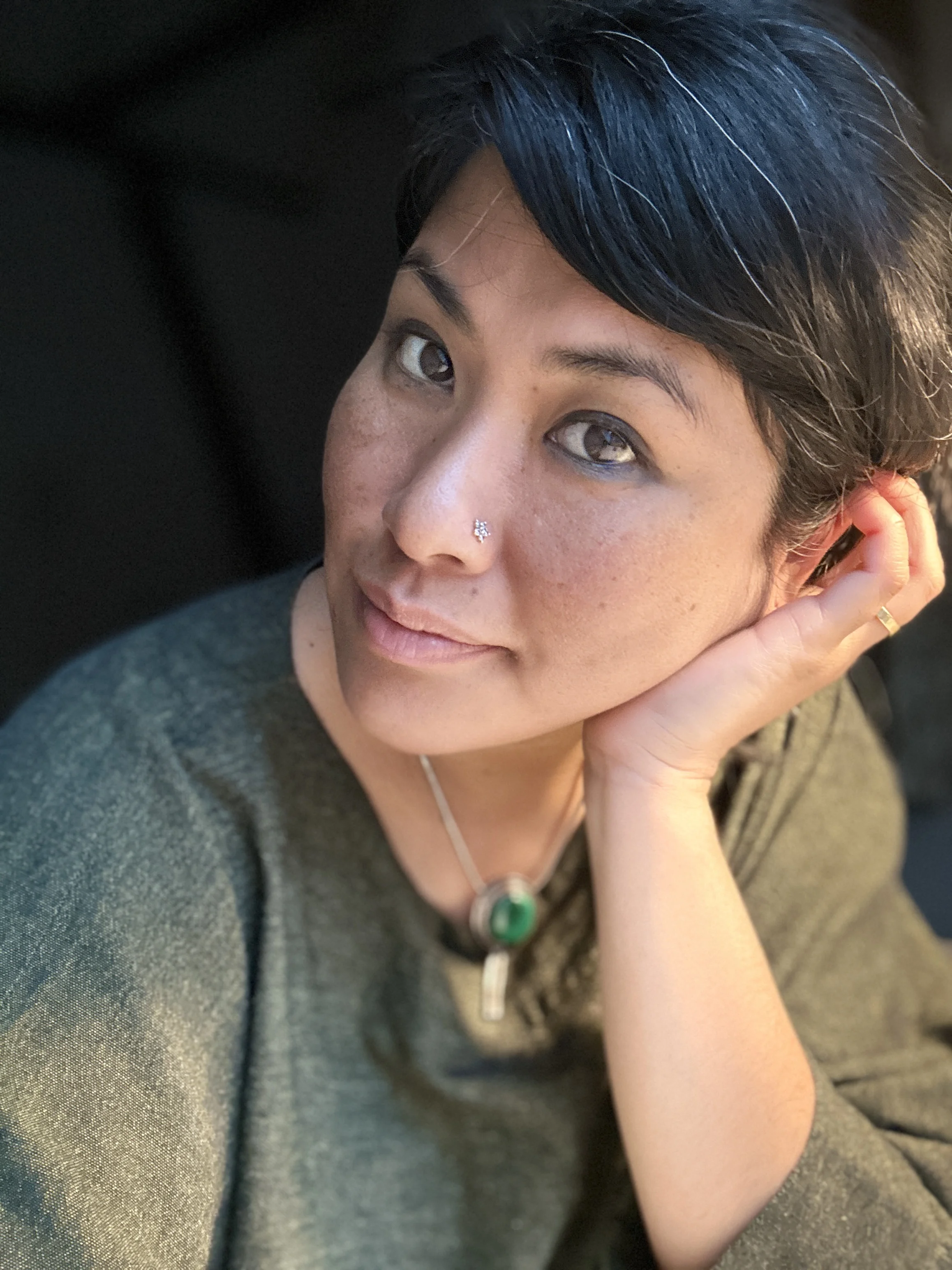
Muna Gurunis a writer, educator and translator based in Kathmandu, Nepal. She received her MFA from Columbia University, where she was a teaching fellow. Her fiction, nonfiction and translations have appeared in various online and print publications. Her translation of Sulochana Manandhar’s poems, NIGHT, was published by Tilted Axis Press in 2019. Muna is interested in recording stories of Nepali women; and through her project Lightroom Conversation, she writes about women in the Nepali literary scene. In collaboration with Srijanalaya, Muna has also edited over 20 children and young adult books in Nepali and English. Muna teaches writing at The Open Institute for Social Science, and she is the founder of KathaSatha, an initiative that fosters a writing and storytelling culture by creating and supporting writers and writing from Nepal. When not writing or teaching, Muna runs a pickles and preserves company with her mother called ĀMĀKO.
“In keeping with Land Lines’ explorations of rurality, I spent the two months of residency focused on writing the Parbat part of the book that takes place in a sleepy village in midwestern Nepal. The novel explores, amongst other things, folktales, food and feminisms (feminized knowledge) against the backdrop of violence (familial and political). While writing this part, I was also interested in understanding how these themes live or take shape in the context of Schöppingen or Münsterland. I did this not as a tool of comparison, but a way to not simply be transplanted in a place and create work in isolation.
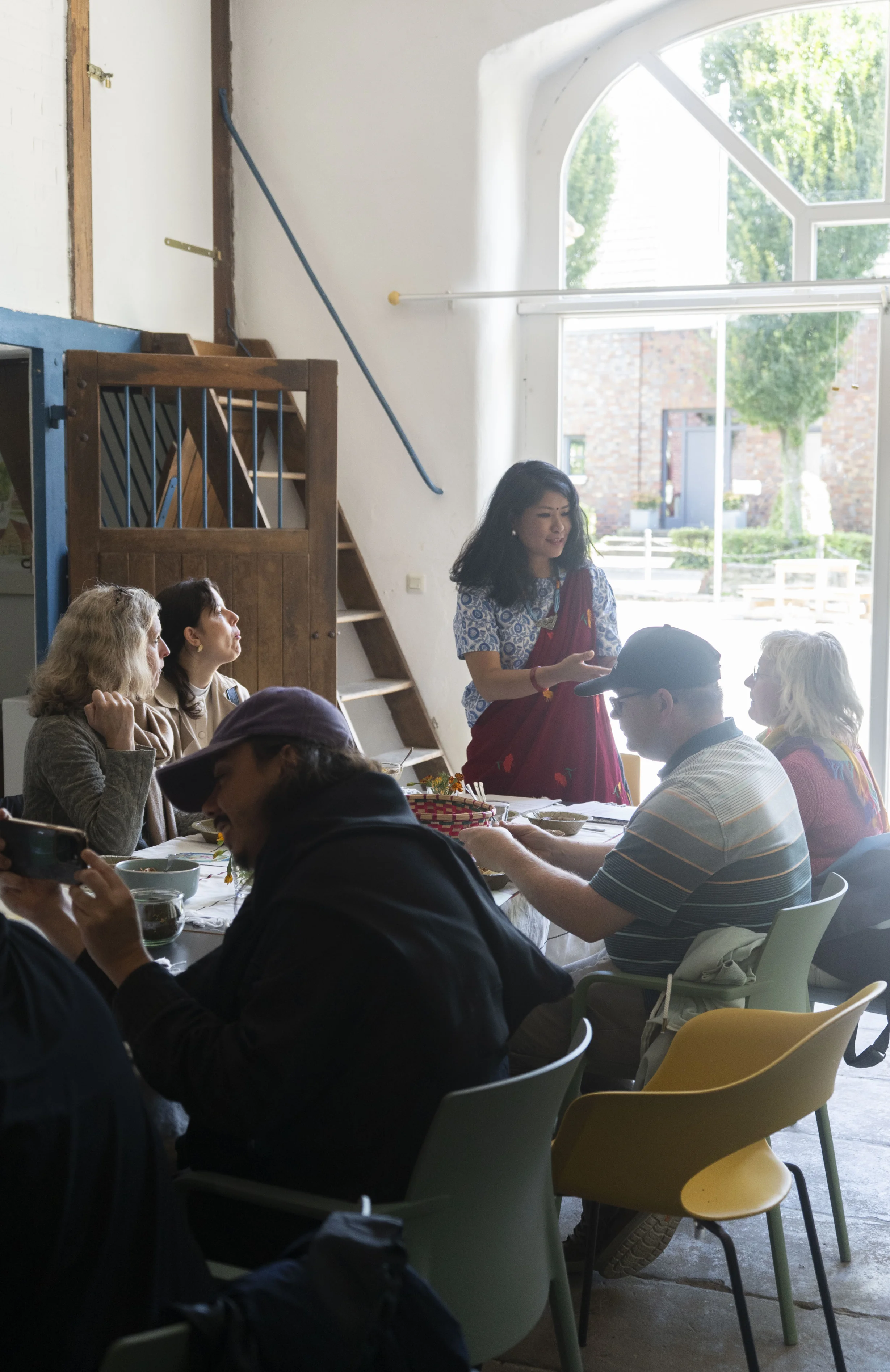
I spent a substantial amount of time meeting with locals from the village— elders, women and men; migrants, those waiting in the camp for a (more) permanent status in Germany; younger Schöppingers and a few women from the migrant communities. I travelled around the village and its surrounding areas with an elder uncovering site-specific folktales and stories related to existing natural forms like a tree or the geographic shape of a place. With a Ukrainian family, we set up jars of fermented cucumbers and tomatoes in Ukrainian style using salt from their home. With migrant families living in Schöppingen, we spoke about the distance we strive to narrow through food– for instance, what do we eat when we are homesick? What kinds of foods do we prepare as a way to transport ourselves to a place where we are comforted? And in all of this, what do we understand as being sacred (and therefore irreplaceable/ untranslatable) in food, in land, in our ways of inhabiting a space?
In many of these conversations and in my own act of reproducing food that my body and heart crave, we landed on translations or iterations. One Ukrainian elder said, “Back home, I know exactly the kinds of cucumbers that will pickle well and those that won’t, but here (in Germany), I am not so sure.” Both fermentation and folk tales are modes of preservation, retold/ reshared at a later time in a different form. This retelling might be different each time, but we trust our co-artists (microbes and time) in this act of making something. One of the things that many fermentation cultures engage in is to capture the abundance of one season to be enjoyed in another. In Parbat, summer’s surplus is dried, smoked, fermented, pickled to be enjoyed in the dead of winter when the ground rests. This transportation or transformation is also a translation of sorts. And in many ways, it is a kind of time travel that writers with their works always perform.
Fermentation is also about slow, hard work— the microbes (millions of them) are hard at work. There are no shortcuts. There are no “smart ways” of achieving a fermentation, no way of “cheating the system”— it takes time and we are powerless in the face of its methods. In May, we tried a few different kinds of fermentations— a Ukrainian cucumber and tomato in salt water with spices; a water and milk kefir experimentation; and a Nepali lemon salted fermentation; and two other Nepali radish and carrot fermented pickles.
In addition to the conversations with community members, cooking and fermenting, I also worked on writing further the part of my novel that takes place in rural Nepal, focusing mainly on folk stories from that area and I also re-fabulated some new tales that are a mix between those from Parbat and those in German Münsterland area.”